Mini Monsters: Card Collector
- 4.7
- Rating
- 10.00M
- Installs
- Free
- Price

 Analysis by App-foxy
I noticed the appeal of Mini Monsters: Card Collector almost immediately: it turns the familiar idea of collecting creatures into a compact card-dueling routine. I choose a deck, enter a match, watch the clash unfold, receive the result, and then feel the small pull to improve the next attempt. That basic cycle is easy to understand, but it works because each stage leads naturally into the next one.
This is a casual game from Homa, and it is free to start. Its store summary focuses on collecting, building a deck, and competing in duels, but that description does not quite capture the practical experience. The game is less about sitting down for a long strategic campaign and more about fitting a quick decision-making session into spare time. I can approach it as a light distraction, yet there is enough deck-focused thinking to make each match feel more meaningful than a completely passive time-killer.
The game has reached over 10 million installs, with a 4.7 average from around 242 thousand ratings. Those figures suggest that its simple presentation and collectible loop have found a broad audience. My own recommendation is more specific: it suits players who enjoy short competitive encounters and gradual collection progress, while people looking for a deep trading-card game should keep their expectations under control.
You May Also Like

 Blood Strike: 2.5 Anniversary
Blood Strike’s Loadouts Turn Every Drop Into a Tactical Gamble
A close look at Blood Strike’s custom loadouts: how fast access to signature weapons reshapes its battle royale rhythm, rewards preparation, and narrows the gap between fights.

 Pandora - Music & Podcasts
Pandora’s Music Is Easy to Start, but Harder to Recover
Pandora’s strength is its low-effort path from a seed to a station. Its weak spot is how much confidence it asks you to place in connection, setup, and quiet recovery.

 8 Ball Pool
 Is Built on Rivalries, Rematches, and Routine
A close look at the rivalries, rematches, shared routines, and unanswered safety questions that turn a quick pool match into a persistent mobile community.

 Samsung Music
’s Quiet Strength Is Playing What You Already Own
Its reach comes less from spectacle than from dependable access to a personal library. That simplicity is both the app’s strongest retention engine and its ceiling.

 AccuWeather: Weather Radar
AccuWeather Review: A Quick, Clear Forecast for Everyday Decisions
For everyday plans, the best forecast is the one you can understand quickly. AccuWeather makes rain timing, radar, and local conditions easy to act on, with a few trade-offs.

 Hill Climb Racing
Why Hill Climb Racing Still Turns Crashes Into One More Run
A tiny car, a bumpy hill and one more upgrade: Hill Climb Racing keeps resurfacing because its simple chaos makes every near-miss feel personal.
More From Our News Desk



How the first duel sets the loop in motion
I like how the opening duel makes deck choice feel purposeful without asking me to study a complicated rule set first. The useful thing to notice is whether the setup feels clear enough to test, not whether it wins immediately; that gives me a better starting point for understanding what the game rewards. From there, the next section looks at how match results turn into collection progress and a reason to return.
The first action is choosing what to bring
The most important decision happens before the duel really gets going: I have to think about the deck rather than treating every match as an automatic tap-through. That preparation gives the collection a purpose. New cards are not merely objects to admire; they become possible changes to the way I approach the next encounter.
I found it useful to pause before changing everything at once. When a match goes badly, the tempting reaction is to replace several cards immediately. That makes it difficult to understand what helped. A better routine is to make one clear adjustment, play again, and pay attention to whether the result changes. This turns the deck screen into a place for small experiments instead of random rearranging.
That advice matters especially for casual players, because the game can look simpler than it feels. The controls and general objective are approachable, but a deck still benefits from a little consistency. If I keep changing the entire setup after every loss, I am reacting emotionally rather than learning. Keeping a familiar core while testing one new option makes the collection process more rewarding.
The first action is therefore not simply pressing a battle button. It is deciding how much thought I want to invest. For a quick break, I can make a fast choice and move on. When I have more time, I can compare the cards I have gathered and look for a setup that feels more reliable. That flexibility is one of the strongest reasons the game works as a casual title.
Why the opening seconds matter
Mini Monsters: Card Collector does not need a complicated tutorial pitch to communicate its premise. The connection between collecting and dueling is clear: I gather options, use them in competition, and then return to the collection with a better idea of what I want next. The loop gives even a short match a recognizable purpose.
There is also a useful psychological distinction between starting a match and starting a long campaign. A duel feels contained. I do not need to reserve an evening or remember a large story. That makes the game a good fit for a commute, a waiting room, or the few minutes before bed, provided I am comfortable with the possibility that one match may encourage another.
Players who prefer complete control over every turn may find the experience too lightweight. The game’s strength is its quick movement from preparation to competition, not the elaborate planning found in more demanding card battlers. If your ideal card game involves reading a large rulebook, calculating many chains, or managing a highly detailed metagame, this is probably better treated as a companion game rather than a replacement.
The feedback rhythm keeps decisions understandable
After I act, the game gives me a result quickly enough for the decision to remain fresh. That is important in a collection game. If the connection between a deck choice and the outcome were difficult to notice, collecting would feel like filling a shelf without a reason. Here, the duel provides the immediate feedback that tells me whether my current approach deserves another try.
I like this rhythm because it encourages observation without demanding a spreadsheet. I can ask simple questions: Did the revised deck perform more reliably? Did I make the change because it made sense, or because I was frustrated? Am I enjoying the match itself, or only chasing the next item? Those questions help prevent the reward system from becoming the only reason to continue.
A practical tip is to judge a deck over several attempts instead of treating one result as a final verdict. Casual games can produce a strong emotional reaction to a single win or loss, but one outcome does not always tell me whether a setup is good. I get more useful information by remembering the pattern of results and whether the deck feels easy to use.
Where the rhythm can become repetitive
The same compact structure that makes the game convenient can also limit its long-term variety. Once I understand the basic action-feedback sequence, the surprise comes less from learning the rules and more from seeing what the next collection step offers. Players who need constant novelty may eventually feel that the routine is repeating before the strategic layer has enough depth to refresh it.
That is not automatically a flaw. A casual game is allowed to be familiar. The real question is whether the familiar action remains satisfying after the initial curiosity fades. In my experience, it depends on how much pleasure I get from small deck adjustments. If I enjoy incremental improvement, the rhythm remains pleasant. If I want dramatic changes from match to match, it may feel narrow.
Rewards, collection progress, and the reason to play again
Collection progress matters most when I treat a new card as a possibility to evaluate rather than an automatic improvement. I find it more useful to keep a familiar deck core, change one element, and see whether the next duel feels different; that makes short sessions informative instead of haphazard. The following section brings those choices together and considers how satisfying the full cycle remains over time.
The reward gives the duel a future
A match would be much less appealing if its result simply disappeared. The collection element gives the outcome a forward direction: after competing, I have a reason to inspect what I have and consider how it affects my next deck. That is the point where the game changes from a sequence of isolated duels into a continuing routine.
I recommend treating each reward as a tool rather than an automatic upgrade. The newest card or addition may be interesting, but it is not necessarily the right answer for the deck I already understand. I get more satisfaction when I ask what problem the new option solves. Does it support the way I like to play? Does it make the deck easier to use? Does it encourage a different approach that I actually want to test?
This is one of the less obvious strengths of the game: the reward is most valuable when it creates a question. A new collectible can make me rethink a familiar setup, and that small uncertainty is what gives the next session its purpose. Without that question, the collection would be decorative. With it, even a modest addition can change how I approach the following duel.
At the same time, collection games can make progress feel uneven. Some rewards will excite me more than others, and a player focused on a particular deck idea may become impatient when the next addition does not fit. I found it healthier to view the collection as a gradual set of possibilities rather than expecting every reward to transform the game immediately.
How to avoid wasting the reward loop
My preferred workflow is simple. First, I play with a deck long enough to understand its basic behavior. Then I examine the new option and decide whether it belongs in the current setup. Finally, I test it without changing every other part of the deck. This preserves a clear link between the reward and the result.
That approach is especially useful for someone playing in short bursts. When time is limited, it is easy to make a hasty change, lose, and assume the new card was useless. A controlled test is more informative. Even if the result is disappointing, I learn whether the issue was the card, the surrounding deck, or the way I used it.
Players should also remember that free-to-play collection systems can include optional spending. Mini Monsters: Card Collector has in-app purchases ranging from $1.99 to $49.99 per item. That range makes it worth deciding in advance whether I am playing purely at no cost or whether I am comfortable paying for faster access to additional content. The free entry is welcoming, but the presence of purchases can change how patient I need to be with collection progress.
My advice is to enjoy the duel loop first and treat purchases as optional rather than necessary for the game to make sense. If the matches are not enjoyable before spending, buying more collection opportunities is unlikely to fix the underlying problem. On the other hand, players who already like the routine may see optional purchases as a convenience, as long as they set a personal limit.
The reset is what makes another session tempting
After a duel and its reward, the game returns me to a familiar decision point. I can stop with a completed mini-session, or I can use what I just learned and begin again. That reset is not a hard restart in the frustrating sense; it is a chance to apply the latest information to a fresh attempt.
This is where the design feels particularly well matched to casual play. A session can end after a single result without leaving me stranded in a complicated campaign. If I have another few minutes, I can continue. If I need to put my phone away, the loop has still delivered a complete unit of play: action, feedback, reward, and a clear next decision.
The drawback is that the reset can encourage “just one more” behavior. Because the next match is easy to begin, a short break can quietly become a longer session. I do not consider that unique to this game, but the quick reward cycle makes it noticeable. A useful boundary is to stop after a planned number of tests rather than waiting until I feel completely finished, since the loop is designed to keep presenting another reason to continue.
A realistic everyday use case
Imagine having ten minutes before an appointment. I can open the game, check the deck I used previously, make one deliberate adjustment, and enter a duel. The result gives me immediate feedback, and the collection progress provides a small sense of completion even if I do not continue. If the appointment is delayed, I can begin another test; if I am called in, I can leave after the current segment instead of abandoning a long story mission.
That same structure works during a short lunch break, although I would be careful if I know I am easily drawn into repeated attempts. The game is best when I decide whether I want a single compact session or an open-ended collecting session before I start. That small bit of self-management keeps the convenience from turning into distraction.
Who should choose it, and who should skip it?
I would recommend it to players who like creature collecting, quick duels, and light deck experimentation. It is also a reasonable choice for someone who wants a free casual game that can be understood quickly and played in short windows. The Everyone age rating makes it broadly accessible, though parents should still be aware that optional purchases are part of the experience.
I would skip it if your priority is a deep competitive card game with extensive tactical control, a large narrative campaign, or a carefully structured long-term progression system. I would also hesitate to recommend it to anyone who dislikes collection mechanics on principle. The central satisfaction comes from gathering options and deciding how they affect future matches; without that interest, the loop may feel repetitive very quickly.
Compared with a traditional puzzle game, this title offers more continuity because each result feeds the collection. Compared with a full trading-card battler, it is easier to enter but less suited to players who want highly elaborate strategy. That middle position is important. It is not trying to replace every other casual game; it is a focused option for people who want a small competitive routine with collectible momentum.
My verdict on the complete action-to-reset cycle
Looking at the complete cycle, I find the strongest experience comes from making a deliberate deck choice, noticing the duel’s feedback, and deciding whether another attempt is worth my time. That approach also helps me keep the game’s quick, repeatable structure enjoyable without letting the next reward make every session feel compulsory. The final verdict weighs that convenience against the limits of a compact casual card game.
What makes the loop hold together
The best part of Mini Monsters: Card Collector is the clean connection between its stages. I choose a deck, compete, receive feedback, gain a reason to inspect my collection, and then decide whether the new information deserves another duel. None of those steps needs a long explanation, but together they create a satisfying structure.
The game also benefits from being free to download and from supporting older devices running at least Android 7.1. Its current version is 1.6.0, which gives prospective players a clear point of reference when deciding whether their phone or tablet is suitable. I would still approach it as a lightweight casual experience rather than a major all-purpose game, because its appeal depends on enjoying repetition with small variations.
Homa has kept the concept approachable, and that accessibility is a genuine advantage. I can recommend it to a friend without needing to explain a complicated ruleset first. The more nuanced recommendation is that the friend should enjoy collecting and modest deck decisions. The game’s simplicity is inviting, but it also defines its ceiling.
The limitations I would consider before installing
The main limitation is the potential for the loop to become predictable. Once the first excitement of collecting fades, the experience relies on whether deck changes and duel results still feel worth examining. Players seeking a constant stream of new mechanics may not find enough variety here.
The second consideration is spending pressure. The free price is a good starting point, but the optional purchase range means that collection-focused players should decide how they want to engage before the reward chase becomes emotional. I prefer using the game as a free casual title first, then judging whether its ongoing value justifies anything more.
Finally, the game is not ideal when I want complete strategic control. Its appeal comes from the speed and clarity of the loop, not from turning every match into a long calculation. That trade-off is fair, but it should be understood before comparing it with more demanding card games.
My final recommendation
I enjoyed Mini Monsters: Card Collector most when I treated each duel as a small experiment rather than a test of perfection. The reward mattered because it gave me something to reconsider, and the reset worked because the next session felt like an opportunity to apply what I had learned. The strongest reason to play again is not simply getting another card; it is discovering whether that card changes the way I approach the next duel.
For a casual player who wants a friendly collecting game with quick competitive encounters, I think it is worth trying. It is approachable, easy to fit into everyday gaps, and clear about its central routine. For players demanding deep card-game complexity or endless mechanical variety, I would look elsewhere. My overall view is positive, with one condition: enjoy the compact loop for what it is, and make deliberate choices about both deck changes and optional spending.
FAQs for Mini Monsters: Card Collector
01What is Mini Monsters: Card Collector?
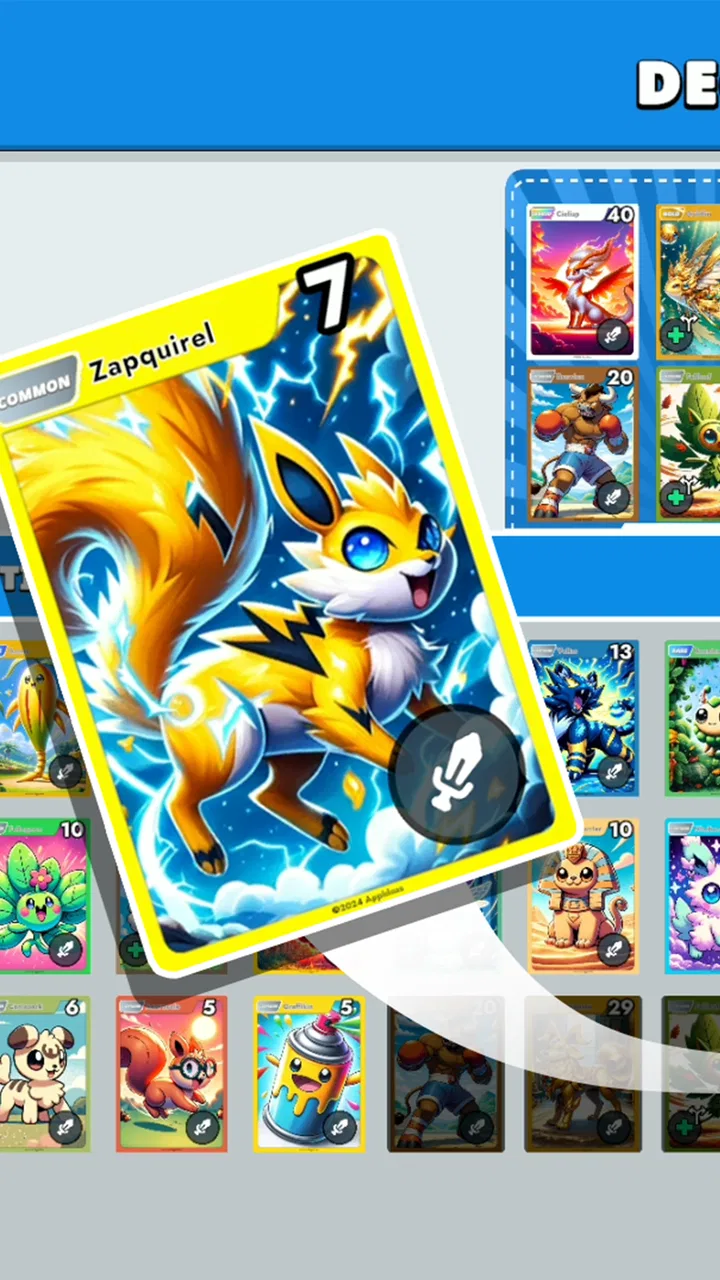
Mini Monsters: Card Collector is a collection-focused mobile game in which you discover, obtain, and organize cards featuring miniature monsters. The main appeal is building a complete and visually appealing collection while progressing through the available activities. It is designed for players who enjoy creature collecting, unlocking new content, and gradually improving their card selection rather than fast-paced action alone.
02How do you collect new monster cards in Mini Monsters: Card Collector?
New cards are generally obtained by progressing through the game, completing activities, opening available rewards, and using the collection systems provided. The exact opportunities can vary depending on the game mode and current events. Players should expect a gradual collecting experience, where patience and regular play can be important for finding rarer monsters and filling gaps in the collection.
03Is Mini Monsters: Card Collector free to download and play?
Mini Monsters: Card Collector can be downloaded without an upfront purchase, allowing players to try its core collecting experience first. However, free-to-play mobile games may include optional in-app purchases, such as packs, currency, bonuses, or other shortcuts. Before downloading, parents and players should review the store listing and device purchase settings, especially if the game will be used by children.
04Does Mini Monsters: Card Collector require an internet connection?
An internet connection may be needed for important functions such as downloading game data, synchronizing progress, receiving updates, accessing events, or completing purchases. Some parts of the experience may work when you are offline, but this should not be assumed for every feature. If reliable access is important to you, check the current store description and test the game after installation.
05Is Mini Monsters: Card Collector suitable for children?
The game may be appealing to younger players because of its collectible monster theme and straightforward progression, but suitability depends on the child’s age and your family’s preferences. Review the official age rating, advertising policy, chat or social features, and in-app purchase options before allowing unsupervised play. Setting parental controls is recommended to prevent accidental purchases and limit screen time.
Pros
- Simple card-collecting system that is easy for new players to understand.
- Monster designs are colorful
- charming
- and suitable for casual play.
- Short sessions make it convenient for playing during quick breaks.
- Collecting goals provide a satisfying sense of progress over time.
- Runs smoothly on many modern Android and iOS devices.
Cons
- Progress can feel slow when trying to complete rarer card sets.
- Some content may become repetitive after extended play sessions.
- Random card rewards may frustrate players seeking specific monsters.
- Limited strategic depth may not satisfy dedicated card-game fans.
- Optional purchases can make collection-focused progress feel less balanced.

Mini Monsters: Card Collector
Gallery